Our Location
fes, morocco
Sidi Harazem 30070
Zellige has been laid on floors in Morocco for centuries, from the courtyards of Fez riads to mosaic floors in old palaces. On a modern floor it needs a little more thought than on a wall, so here is what to know before you choose.
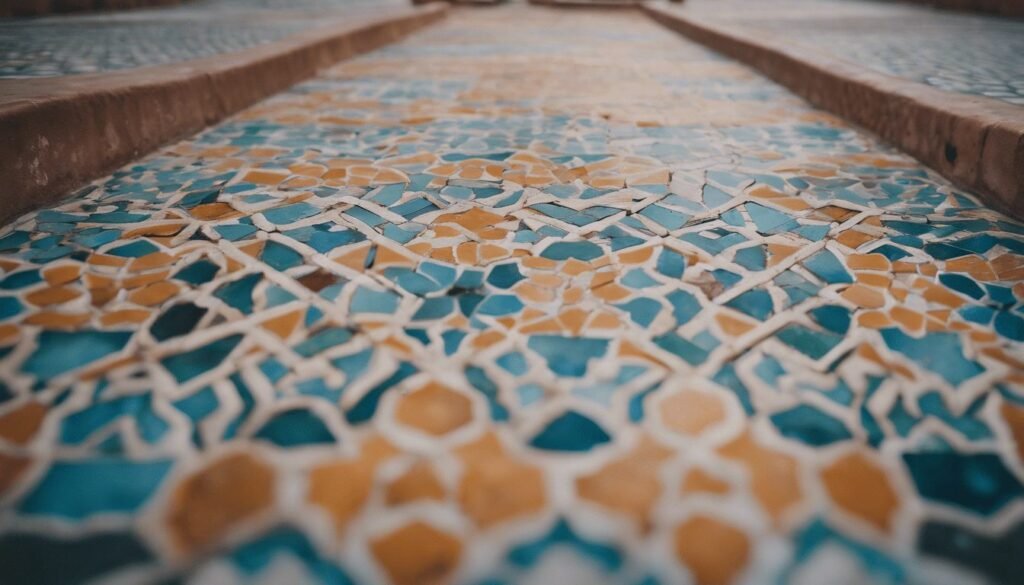
Handmade zellige is softer than porcelain, and its glaze can scratch or chip under heavy wear. It works best on low-traffic floors: powder rooms, bathrooms, small entries and shower floors with the right finish. For busy kitchens and hallways, many designers keep zellige on the walls and choose a harder floor.
Glazed zellige is glossy and can be slippery when wet, so it is best kept to dry, low-traffic areas. Unglazed Natural zellige shows the raw terracotta clay of Fez. It has more grip, wears in gently over time, and is the traditional choice for floors. It must be sealed to protect it from stains.
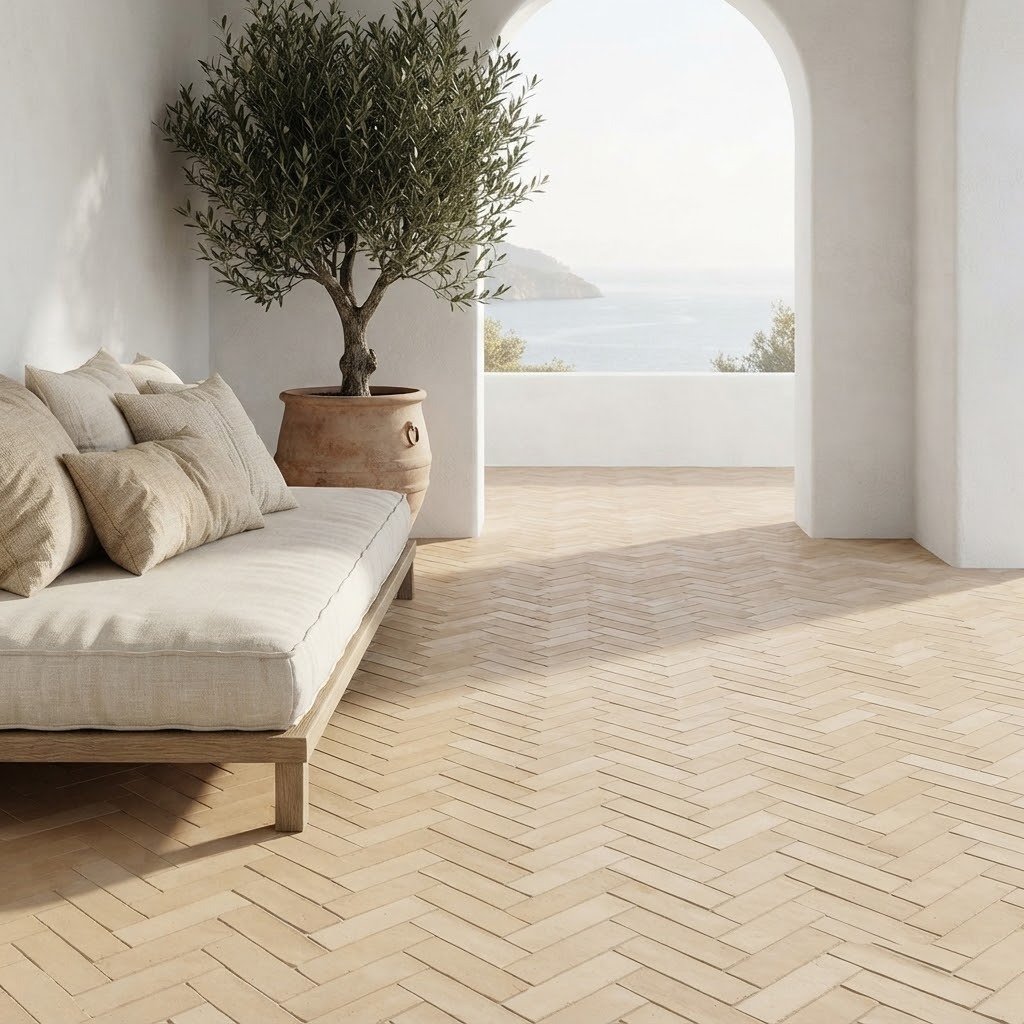
Bejmat 2×6 is the classic Moroccan floor brick, often laid in herringbone. 2×2 squares add grout lines and grip on shower floors.
Seal unglazed tiles and all grout after installation and again as needed. Clean with a pH-neutral cleaner and a soft mop. Use felt pads under furniture and avoid dragging heavy objects across the floor.
4×4 · 2×2 · Hexagon · Bejmat 2×6 · Sample box
Zellige is glazed and cut by hand, so every glaze looks different in different light. Our sample box puts real tiles in your hands before you order. Every order ships from Fez, Morocco by DHL Express, and larger pallet orders can ship by sea.